Fake News has taken the media by storm, and it can be hard to know what to believe. Check out my latest post to learn how you can do your part to stop the spread of false information.
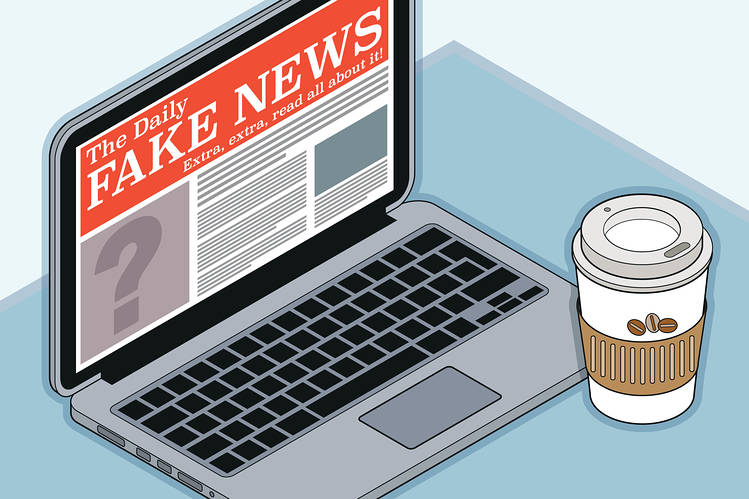
The Fake News Crisis
Over the past few years, “fake news” has become a buzzword that has had a huge effect on what we believe to be true, and what media sources we can trust to provide is with accurate, honest news. In the eras of journalism before social media, it was generally assumed that the media was a reliable source, and most of the news you were exposed to was true. In the era of social media, it can be hard to decipher what is a credible source, and what is fake news.
As we saw with the 2016 presidential election, fake news can have a huge impact on politics and our society as a whole. It has the potential to sway our opinions and shape our ideologies, which can be dangerous if we are basing our actions and opinions off of information that is intentional false or created to skew your thinking,
The article Fake News Expert on How False Stories Spread and Why People Believe Them from npr.org shares insight from Buzzfeed Media Editor, Craig Silverman, on how fake news has infiltrated social media platforms such as Facebook, creating media skepticism and tangible real life issues on important matters, such as politics. Looking back on the 2016 election, I can remember the media being filled with outlandish stories about both candidates, and not knowing what to believe. This made it very difficult at times to make an informed decision, and I felt like it was impossible to fully trust any article I saw. I thought it was interesting that Silverman stated that his research showed that the fake news stories tended to be pro-Trump, while slandering Clinton. Knowing now how much fake news and scandal there was at the time, I think this definitely had an impact on the results of the election.
Hearing What We Want to Hear
The main takeaway that I had from this article was how we as humans react to information, and the role this plays in perpetuating fake news. As Silverstein stated, we have a predisposition to accepting information that aligns with our beliefs, and readily rejecting anything that goes against these beliefs. Social media algorithms certainly don’t help this problem, as they continue to feed us more of what we want to see. This only keeps us more set on holding on to our beliefs, whether the information supporting them is true or not. Tying this back in with the election, people weren’t even checking to see if the media they were engaging with was fake news, because they loved having confirmed what they wanted to hear. Unfortunately, this minimizes the opportunity for productive discourse, as nobody was willing to hear out the other side or investigate further to get the facts straight. As Silverstein stated, even when these fake news stories were debunked, people had become so indoctrinated into believing the stories that aligned with their beliefs that they were not even willing to see the truth, so the damage was already done.
Doing Our Part: Stopping the Spread of Fake News
Although the prevalence of fake news is a huge issue that has plagued the media industry and caused negative effects in the real world, there are ways to stop the spread of false information and keep yourself informed. The article How to Spot Fake News by Eugene Kiely and Lori Robertson for factcheck.org details a list of various steps that you can take to ensure your news is accurate and honest. Among all of these tips, I think the most important one, and the one that aligns most with the issue I detailed in this post, is to check your biases. Of course, we all hold unique opinions, but when analyzing a source it is important to take measure to see whether the source is actually valid, rather than blindly accepting it because it aligns with our views or ideologies. Essentially, we all need to do our part in checking our confirmation bias at the door.
“Check your biases. We know this is difficult. Confirmation bias leads people to put more stock in information that confirms their beliefs and discount information that doesn’t. But the next time you’re automatically appalled at some Facebook post concerning, say, a politician you oppose, take a moment to check it out”
Eugene Kiely and Lori Robertson of factcheck.org
Current Issue: Misinformation on Coronavirus
Although the publishing of fake news is something we have little control of, as consumers of the media we all have a part to play in fact-checking and doing our due diligence to do the research necessary to make sure that we are not continuing to spread false information. To cite a current example, the coronavirus is a global issue that we are all dealing with, and for the health and safety of all individuals it is imperative that the information we are receiving and spreading is accurate and up to date.
Unfortunately, there is a lot of fake news and rumors being spread via the media about the pandemic, which only leads to more panic, chaos, and potential for worsening the situation and putting people’s lives at risk. The Buzzfeed News article Here’s a Running List of the Latest Hoaxes Spreading about the Coronavirus by Jane Lytvynenko lists an alarming number of fake news stories spreading misinformation about the virus. From false text messages stating that officials are ordering cities to go into lockdown (which have now been debunked) to other platforms spreading fake “cures” to the virus, these stories are putting individuals at risk during a time where it is imperative to stay informed for the well-being of not only our country, but the world.
It can be easy to get discouraged or bogged down with the prevalence of fake news. If you’re anything like me, you may even go as far to be sick of scrolling through social media, doubting the accuracy of any headline you see. Although we can’t control fake news from being published, as consumers of media we can all do our part by fact checking our sources and trying to put our personal biases aside to lessen the spread of false information.
 Maria's Musings