Featured

Content is Key: Power of Content Creation

Content Creation is a valuable tool for public relations professionals. Check out this article to find out how to perfect your strategy and engage with your audience.

Content creation is a cycle of finding, reading and sharing relevant information.

The term “content curation” may sound like one of those industry buzzwords, but it actually holds more weight than you may believe. In a world where social media is now a pillar of the journalism and public relations industries, our feeds are constantly flooded with content and information. As I’ve discussed before, this can be overwhelming and challenging with the prevalence of fake news, or even just sensory overload. As a company or brand, it is important to showcase and reflect the image that you are trying to present. This means gathering and curating the content that appeals specifically to your audience.

Breaking it Down: What is Content Curation

As the notion of content curation is a somewhat newer concept, its important to have a full understanding of what the job actually entails. Whether you are a journalist or PR professional, you are probably used to taking charge and finding stories or creating your own content. However, content curation is more about sharing pre-existing content that is relevant to you audience. In the article 13 Content Curation Tools Every Market Needs for HubSpot, Patrick Armitage provides the perfect clear definition for the term. He states, “Content curation consists of finding materials relevant to your audience from a variety of sources, and sharing it strategically through your communication channels”. Although it seems simple enough to simply repost or share somebody else’s work, there is a lot more to content curation than meets the eye.

Find Your Strategy 

If you want your content curation to be successful and effective for your business, you are going to have to come up with a strategy. Like anything else, the content that your share needs to be well thought out, interesting, informative, and relevant. If content creation was so easy, anyone could do it, but today companies are hiring specific employees just to fill this role to make sure it is being handled with precision and attention to detail. Specific strategies will differ based on the needs and goals of the company. However, there are a few different tried and trued methods that will help you get off on the right start with creating your content creation strategy. The article The Complete Guide to Content Curation: Tools, Tips, Ideas by Todde Clarke for Hootsuite shares the key tactics to achieving an effective content curation strategy. Some of the main points shared here that I found most valuable are knowing your audience, sharing only what is timely and relevant, adding a personal angle to the content, and to always make sure you are still promoting your brand through the content you are sharing. If you start off doing all of this, your strategy will take you far.

An Addition to Your PR Tool Belt 

If you’re in the PR field like me, you may wonder why you need to utilize content curation when you’ve been used to making all your own content. However, the PR industry is all about building a trusting and receptive audience, and content curation helps to foster this. If you want your publics to resonate with your message and listen to you, you need to prove that you are reliable, informed, current and up to date with everything going on. By having a carefully selected content curation strategy, you can show your audience that you are doing just that and develop your brand identity even further. As Kevin Lee words it in the article How to do Content Curation for Public Relations for Audienti, “To establish expertise in your field, the public relations person needs to read, understand, filter, and share good materials from other smart likeminded people or companies. Content creation is a vital part of public relations. But when adding curated content to your existing content strategy, you are showing your audience that your brand is on top of what is happening right now in your industry”. With anything in life, the best strategy is to take tactics and methods from all different sources and add them to your arsenal. This will make you diverse and ahead of the curve in your work, which holds true for the public relations industry. Having a mix of original and curated content will take you to the next level and set you apart from the crowd.

Featured

Public Relations in the Digital Age: Social Media Press Releases

The PR industry is changing, and so are press releases. Traditional releases have been swapped with social media press releases. Check out this article to learn how to craft a stellar social media release.

Social media press releases have given professionals the ability to reach wider audiences via the Internet.

Any public relations professional knows that the bread and butter of the PR industry has always been press releases. PR is all about spreading the word and getting your information out to your publics, and press releases have always been the best way to accomplish this. However, times are changing within the industry as we move toward a digital and social media era. This means saying goodbye to the traditional press releases of the past and moving on to social media press releases.

From the Media to the Internet

In the past, press releases were tangible and specific in its audience. As stated in PRWeb’s news release Traditional Press Release-Out-Online News Releases Are In, the traditional press releases that used to make up the industry were written solely for the media with them as the only audience. At that point, once sent to the media it was up to their discretion whether they felt it was something that fit with their company or they wanted to publish. However, now that social media has creeped into the forefront of the industry, these rules have gone out the window, with the use of social media press releases widening the range of audience and possibility for stories.

The New Era of Press Releases

Because the way we consume and process news has changed, press releases needed a makeover to adapt to this new landscape. Just writing a basic press release is not good enough anymore. On top of having a sharp and clean release in terms of grammar and format, which is expected, your press release needs to be an attention getter to reach anyone, especially in an era where the media is flooded. If you want your press release to stand out and get the headlines you need, there are a few changes your going to have to make. PRWeb lists some great tactics to help make your social media press releases great, including expanding your audience reach by making your releases available to everyone via the Internet, including video, images and audio to gain the attention of your reader, and send your releases to both traditional and online media, just to name a few.

Standing Out Among the Crowd

In the world of PR its not enough to simply do the bare minimum and be just good enough. If you want to get noticed and get your content out there, you need to stand out among the crowd and be exceptional. This applies to your social media press releases too. In an industry that depends on other people sharing your work, you need to convince them that what you have to say is worth sharing, because at the end of the day its up to the media, both traditional and online, to get your word out there. This means crafting press releases that will resonate with the public and have a story to be told. Its imperative to remember that the media is constantly being flooded with different ideas and pitches, so to get noticed you need to prove to them that your angle is worth taking. The article How to Write a Press Release by Tim Donnelly for Inc.com provides some great tips on how to craft a press release that will stand out.

One of the best tips I noticed was to “mind the message”, or essentially figure out and emphasize the message that will make the media care about what you’re saying.

“The ‘news’ in your news release has to be obvious, or else your notice will be fast to the recycle bin. The first step is figuring out exactly what message you are trying to get across, and how it qualifies as news”

Tim Donnelly for Inc.com

Harsh but true, this is the reality that every PR professional needs to be mindful of when crafting a release. On top of having an absolutely flawless format, Donnelly suggests that you also target your distribution to your audience, and utilize multi-media.

Main Differences: Traditional vs Social Media Press Releases

With pros and cons to both formats, there is still a time and place for both traditional and social media press releases. Although at heart they are the same, there are some key differences between the two that will clue you in as to when it is better to use one over the other. The article What’s the Difference Between a Social Media News Release and a Regular Press Release by Mike Santoro for Walker Sands provides some great insight into the differences between the two. Santoro describes that the main three aspects that differentiate a social media press release are the audience, the style, and technology. Generally, social media releases are geared more towards the audience instead of the media, are less formal stylistically, and utilize technology and multimedia.

What I’ve learned from diving into this topic is that although traditional press releases will never go away, its time for PR professionals to add social media releases into their repertoire. To be successful and stand out among the crowd, you need to be able to flawlessly do both, and know when to use one over the other to reach your goals. Make sure to always have your eye on your publics, and emphasize the newsworthiness in every release, and you’ll go far.

Featured

The Best Photo Sharing Platforms For Public Relations Professionals: Instagram VS Snapchat

It’s important for PR professionals to utilize photo sharing platforms to reach their publics and stay up to date with trends. Check out this article to find out whether Instagram or Snapchat is the best way to go.

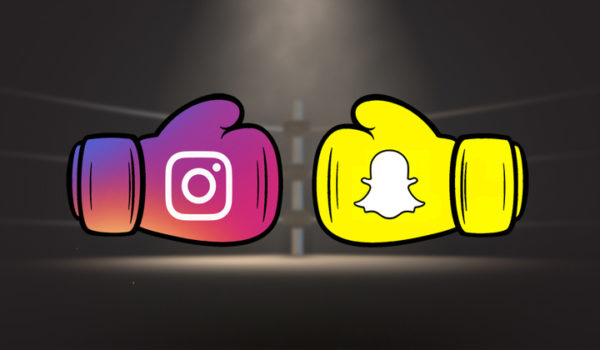
Insta and Snapchat are going head to head for the title of superior photo sharing app

The world of social media can be overwhelming. It seems like almost every day there’s a new platform coming out, and it can be difficult to stay up to date with trends. Especially for PR professionals using social media for business, its crucial to make sure your content is relevant, and you are using platforms that resonate with your publics or target audience. Today, photo sharing platforms are some of the most popular. These are great tools for those in the PR field because they allow you to get creative and think of new and exciting ways to lure in your audience visually. If you’re a modern PR professional you need to be on these platforms, and the big two are Instagram and Snapchat.

Instagram vs Snapchat: Reaching Audiences

 Due to its meteoric rise in popularity over the last few years, most public relations professionals have a pretty good knowledge around Instagram and are using it effectively to reach out to their publics. Instagram is a great tool because it allows you to reach out to a wide audience with normal posts and the use of hashtags, but recently the story option has taking personal users and the industry by storm. As Youtuber Neil Patel mentions in his video Snapchat VS Instagram: Here’s Which Social Media Platform You Should Use For Business, the Instagram story function has proven to be a great asset for public relations. With regular Instagram posts, the amount of content you should post in a day is limited because you don’t want to overwhelm your followers’ feeds at risk of turning them off, not getting likes, or even getting unfollows. However, the story function allows you to post as much as you want as they are viewed more like a narrative. Patel likens these stories to reality TV because they serve as a great way to keep your followers up to date at their viewing leisure. That way, you can keep the content continuously flowing and inform your audience without bogging them down. Additionally, the many features of Instagram stories allow you to be creative and keep your content fresh and interesting. Stories are very on trend right now with influencers, celebrities, brands and the average Instagram user. From livestreams to polls and everything in between, the options for content are endless with Instagram stories.

Snapchat: Uncharted Territory for the PR Industry

Although Instagram is a great professional medium, like I mentioned before its important to stay relevant and keep up to date with trends and popular platforms to reach out to a wide audience. Snapchat is a relatively newer photo sharing platform, but it comes with its own set of advantages and disadvantages. Because it is on the newer side, some PR professionals are afraid to utilize it because they question its validity, however by not using the platform they are alienating an entire target audience and age group. According to the article Snapchat VS Instagram: The Main Differences You Need to Know and Why by Russ Shumaker for Hearst Communications,

“Snapchat is the app for Generation Y, as these graphs show, while Instagram outperforms Snapchat for Millennials, Gen X, Boomers, and beyond. Even though Instagram has three times as many uses as Snapchat, the younger demographic still prefers customizable but short-lived snaps over Instagram photos and videos”

-Shumaker

Even though Instagram has more users overall, if you want your content to reach Gen Z you really need to be utilizing Snapchat. As a young generation who has grown up with social media, Gen Z is on top of all of the trends, so as a PR professional, if you want to stay relevant you need to be using both photo sharing platforms.

The Learning Curve: Using Snapchat Professionally

Snapchat can be a daunting and confusing platform for those who haven’t grown up using it. A photo sharing platform where the photos disappear might not make sense at first glance, but there are many positive elements to Snapchat. One of the main ones is it is a great platform for advertising and connecting with a younger audience. Of course, due to the nature of Snapchat there is the possibility for some mishaps to occur, which is why it is important to learn about the platform and make sure you are using it in a smart and professional manner.

As Shumaker stated, Snapchat does have a somewhat controversial reputation due to hackings of pictures in the past. However, if you are running your account professionally and only posting appropriate content, this shouldn’t be something to worry about from a business standpoint. However, if you are using Snapchat for advertising its imperative that you are being mindful of the ads you’re placing.

The Power of Celebrity: Snapchat Advertising Gone Wrong

The article Rihanna Hits Snapchat Where it Hurts from NewstalkZB shares an important lesson about the dangers of using Snapchat incorrectly. According to the article, in 2018 Snapchat faced a huge blow that cost the company $600m for placing an ad for a website with a game mocking Rihanna’s domestic violence situation with Chris Brown. Immediately, Rihanna took to Instagram to speak out against the issue, urging users to delete the app, which led to immediate backlash for Snapchat and an enormous loss of money. This story serves as an important warning for any PR professionals wanting to incorporate Snapchat into their repertoire. If you’re going to use Snapchat, you need to double check that your content is appropriate. With the opportunity to reach mass audiences so quickly on a photo sharing platform such as Snapchat, one mistake could cost you everything. Especially with celebrities and influencers with millions of followers, their social media influence is too large to risk anything.

The main takeaway here is that there are pros and cons to both Instagram and Snapchat as photo sharing platforms for public relations professionals. In order to reach all audiences and stay current, you need to be using both. Just make sure that you are doing your research and being smart with every post.

Featured

Finding Accurate Information in the Era of ‘Fake News”

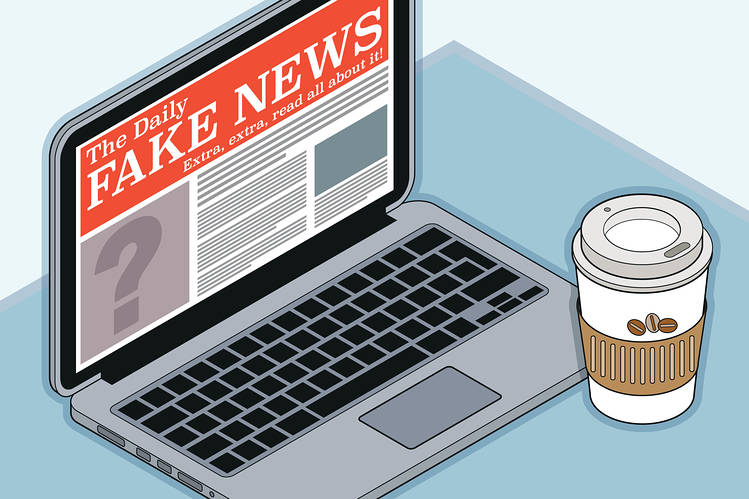
Fake News has taken the media by storm, and it can be hard to know what to believe. Check out my latest post to learn how you can do your part to stop the spread of false information.

The Fake News Crisis

Over the past few years, “fake news” has become a buzzword that has had a huge effect on what we believe to be true, and what media sources we can trust to provide is with accurate, honest news. In the eras of journalism before social media, it was generally assumed that the media was a reliable source, and most of the news you were exposed to was true. In the era of social media, it can be hard to decipher what is a credible source, and what is fake news.

As we saw with the 2016 presidential election, fake news can have a huge impact on politics and our society as a whole. It has the potential to sway our opinions and shape our ideologies, which can be dangerous if we are basing our actions and opinions off of information that is intentional false or created to skew your thinking,

The article Fake News Expert on How False Stories Spread and Why People Believe Them from npr.org shares insight from Buzzfeed Media Editor, Craig Silverman, on how fake news has infiltrated social media platforms such as Facebook, creating media skepticism and tangible real life issues on important matters, such as politics. Looking back on the 2016 election, I can remember the media being filled with outlandish stories about both candidates, and not knowing what to believe. This made it very difficult at times to make an informed decision, and I felt like it was impossible to fully trust any article I saw. I thought it was interesting that Silverman stated that his research showed that the fake news stories tended to be pro-Trump, while slandering Clinton. Knowing now how much fake news and scandal there was at the time, I think this definitely had an impact on the results of the election.

Hearing What We Want to Hear

The main takeaway that I had from this article was how we as humans react to information, and the role this plays in perpetuating fake news. As Silverstein stated, we have a predisposition to accepting information that aligns with our beliefs, and readily rejecting anything that goes against these beliefs. Social media algorithms certainly don’t help this problem, as they continue to feed us more of what we want to see. This only keeps us more set on holding on to our beliefs, whether the information supporting them is true or not. Tying this back in with the election, people weren’t even checking to see if the media they were engaging with was fake news, because they loved having confirmed what they wanted to hear. Unfortunately, this minimizes the opportunity for productive discourse, as nobody was willing to hear out the other side or investigate further to get the facts straight. As Silverstein stated, even when these fake news stories were debunked, people had become so indoctrinated into believing the stories that aligned with their beliefs that they were not even willing to see the truth, so the damage was already done.

Doing Our Part: Stopping the Spread of Fake News

Although the prevalence of fake news is a huge issue that has plagued the media industry and caused negative effects in the real world, there are ways to stop the spread of false information and keep yourself informed. The article How to Spot Fake News by Eugene Kiely and Lori Robertson for factcheck.org details a list of various steps that you can take to ensure your news is accurate and honest. Among all of these tips, I think the most important one, and the one that aligns most with the issue I detailed in this post, is to check your biases. Of course, we all hold unique opinions, but when analyzing a source it is important to take measure to see whether the source is actually valid, rather than blindly accepting it because it aligns with our views or ideologies. Essentially, we all need to do our part in checking our confirmation bias at the door.

“Check your biases. We know this is difficult. Confirmation bias leads people to put more stock in information that confirms their beliefs and discount information that doesn’t. But the next time you’re automatically appalled at some Facebook post concerning, say, a politician you oppose, take a moment to check it out”

Eugene Kiely and Lori Robertson of factcheck.org

Current Issue: Misinformation on Coronavirus

Although the publishing of fake news is something we have little control of, as consumers of the media we all have a part to play in fact-checking and doing our due diligence to do the research necessary to make sure that we are not continuing to spread false information. To cite a current example, the coronavirus is a global issue that we are all dealing with, and for the health and safety of all individuals it is imperative that the information we are receiving and spreading is accurate and up to date.

Unfortunately, there is a lot of fake news and rumors being spread via the media about the pandemic, which only leads to more panic, chaos, and potential for worsening the situation and putting people’s lives at risk. The Buzzfeed News article Here’s a Running List of the Latest Hoaxes Spreading about the Coronavirus by Jane Lytvynenko lists an alarming number of fake news stories spreading misinformation about the virus. From false text messages stating that officials are ordering cities to go into lockdown (which have now been debunked) to other platforms spreading fake “cures” to the virus, these stories are putting individuals at risk during a time where it is imperative to stay informed for the well-being of not only our country, but the world.

It can be easy to get discouraged or bogged down with the prevalence of fake news. If you’re anything like me, you may even go as far to be sick of scrolling through social media, doubting the accuracy of any headline you see. Although we can’t control fake news from being published, as consumers of media we can all do our part by fact checking our sources and trying to put our personal biases aside to lessen the spread of false information.


Featured

Social Media Algorithms Aren’t a Death Sentence for the PR Industry:

With social media platforms adopting algorithms to generate user-specific content, PR practitioners face the issue of getting their content seen. Check out this article to learn how to increase your content visibility and reach by working around the algorithms. 

As this picture demonstrates, social media algorithms play a huge part in deciding what content appears on your feed.

Any active Instagram user knows the struggle of the elusive “algorithm”. As a Gen Z who basically grew up with Instagram, I remember when posts changed from simply being in chronological order of when your followers posted them, to being seemingly organized at random due to the algorithm. However, it’s a lot more complicated than that. These algorithms are highly complex and strategized to provide users with content that the platforms believe the user wants to see. Of course, with anything related to social media there are both pros and cons. This week, I took a deeper look into what algorithms are, and how social media users can get around some of the challenges that come with them.

What’s and Algorithm and How Does it Work

To learn how to work around social media algorithms, its important to have an in-depth understanding as to what they are. An article for forgeandsmith.com, Social Media Algorithms: What They Are and How to Improve Your Research by Pam Berg does an excellent job of simplifying what can at times be hard for the average user to wrap their head around. She explains, “An algorithm is a clearly defined and calculated repeatable process, most often used by computers to solve problems. Social media giants like Facebook, Twitter, Instagram, and Pinterest use algorithms to attempt to predict what their users enjoy and want to see more often, based on how they engage with similar content within their platform”.

Essentially, the algorithm takes into account the users’ interactions with content on their platforms and attempts to replicate and fill your feed with posts that it believes you want you to see. The goal of the algorithm is to show you content that you enjoy and is specific to your interests so that you will have incentive to spend time on the platform and keep coming back.

An Imperfect System

Although in theory the algorithm sounds amazing for providing a customized and enjoyable social media experience, it can actually cause issues regarding visibility of content, especially for those who use media in a professional manner. Due to its mathematical nature, the algorithm assumes that users use social media in a perfect way. However, this is not necessarily the case. With anything, there is always human error. As Berg states, there are many reasons as to why a person may click on an article without reading it, or choose whether or not to like a post. This doesn’t necessarily dictate whether they like that kind of content or not. Because the algorithm can’t read your mind, it can only base the content it provides you from your actions on social media. This may prevent you from having the opportunity to see content that you actually would have been interested in.

This is inconvenient even for casual users who may be missing out on content, but on a larger scale this can be a huge issue for those in the public relations and journalism fields. Algorithms may prevent users within their publics or target market from ever seeing their posts, which reduces the visibility of their content, and therefore effects the success of their outreach.

Strategies to Increase Content Visibility

Although social media algorithms can be a hindrance, there are ways to get around them. In her article, Bergen provides some helpful tips, including having strategies for hashtags and encouraging shareability and engagement of your posts. Another helpful article, What You Need to Know about Social Media Algorithms from the blog Arianne Online by Arianne Smart,  showcases how algorithms can actually be an asset, if you learn how to use them as tools, rather than viewing them as an obstacle to get around. In her article, Smart breaks down the algorithms for various different social media platforms and provides tips on how PR professionals can get their content seen. For example, because the Twitter algorithm places tweets that they think you will care about first on your timeline, and therefore are more likely to be seen, it is important for a PR professional to research and be aware of the content that their publics is engaging with, and attempt to foster engagement with their own followers.

What I’ve learned this week is that although algorithms can be frustrating to work around from a public relations perspective, they are not the end of the world. Like anything else, it just takes time and research to understand what social media algorithms are, and learn how to use them to your advantage. As the articles proved, there are so many ways to get around the restrictions of algorithms, and actually use them to your advantage. The main takeaway I gathered was that if you want your content to be seen, make engaging with your audience a priority and you will go far.

Featured

If You’re Reading This: You Should be Using Twitter

Wondering what all the hype about using Twitter for journalism is about? Check out my latest article to find out why Twitter is an amazing tool, and how to use it to your advantage. 

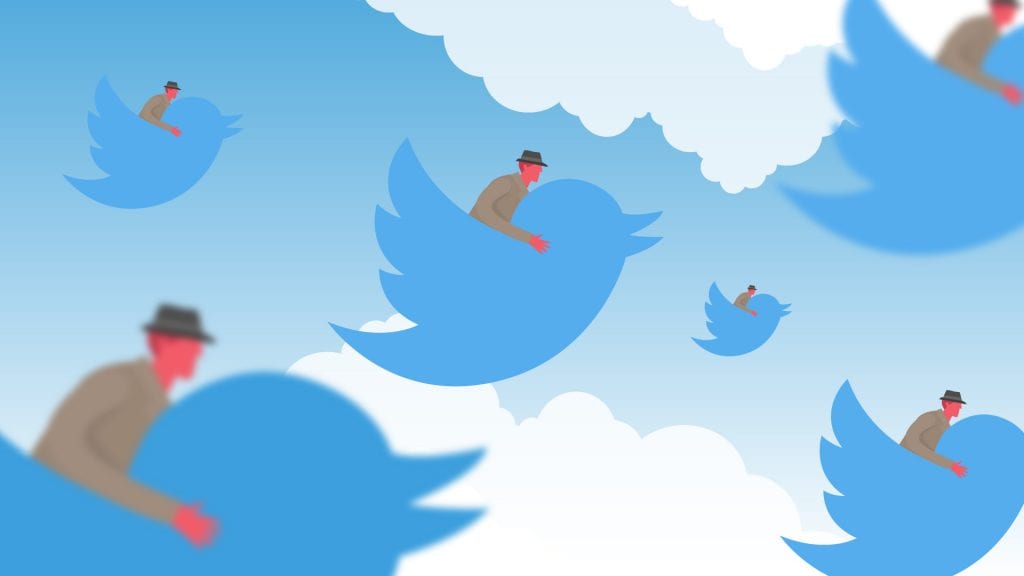
As you can see from this image, journalists are grasping on to Twitter as a new tool.

Without a doubt, social media has changed all of our lives in some shape or form. Platforms like Instagram and Twitter have made the world a little smaller. Of course, there are pros and cons to social media, but at this point regardless of your feelings about social media, its virtually unavoidable. I struggle to think of a single person who doesn’t use social media, either for personal or professional reasons. As time has passed and the popularity of social media has increased, public relations and journalism professionals have been faced with a choice: either conform to the masses and adopt social media (mainly Twitter) as a professional tool, or simply avoid it at all costs. In my opinion, the latter option is detrimental to the PR and journalism professions. This week, I read a few interesting articles stating different opinions on the use of Twitter for journalism and public relations. Let’s dive in!

Is Twitter Harming the Media?

One of the main complaints against using Twitter professionally in the journalism/PR field is that it can propagate “fake news”. The article Twitter Isn’t the voice of the People, and Media Shouldn’t Pretend it is from CBC Radio touches on this topic. Quoting an article written on the topic from Heidi Tworek, the article raises the fear that “Very often, the tweets become the story, rather than a way of illustrating it. And then it’s into dangerous territory, because there are so many users who are not ‘real’ people at all”.

While this can definitely be the case, I don’t think the problem here is inherently with Twitter. Twitter is a tool, and in my opinion, it is up to the journalism or PR professional to make sure the information they are getting is accurate and real. Avoiding fake news on Twitter is as simple as checking your sources. I don’t think you can point to Twitter as the problem when it takes about two seconds to check a user’s account or do some research. Ultimately, it’s up the professional to do their job. This is the way it has always been in the industry, and I don’t think Twitter changes that.

Twitter as a Tool

Despite the possibility for error, I believe Twitter can be a massively helpful tool in the PR/Journalism sphere, and some of the articles I read this week certainly back up my opinion. The blog post 10 Ways Twitter is Valuable to Journalists by Steve Buttry backs up my claim that tons of professionals actually believe that Twitter can be a useful resource. To see full list of ways Twitter is a benefit to the journalism profession, check out Steve’s blog post. To drive the point home, according to Steve just a few ways that Twitter is an asset to the journalism professions is that it helps source breaking news, is an excellent resource for crowdsourcing, and can even help with finding inspiration for story ideas, along with so many other benefits.

Calling all Journalists: You Should be on Twitter

With so many benefits, if you’re a journalist, PR professional, or are working in media in any form, you need to be on Twitter. In the end, it’s only going to hurt your own business if you avoid all social media like the plague. There are pros and cons to all tools, but I feel that if you take the time to learn how to use it correctly and professionally, Twitter will take your work to new heights. The article Should All Journalists be on Twitter by Ann Friedman from the Columbia Journalism Review sums up my main point perfectly: like it or not, Twitter is the future of journalism, and you should only ignore it if you’re happy to stay where you are and never move forward. On an even more extreme note, it’s my personal opinion that we can take this assumption a step farther. If you don’t make use of Twitter, you may be jeopardizing your job and career as it stands.

As Ann states, one of the problems is the mindset that journalists are in. “A lot of journalists still view Twitter as a chore… It’s viewed as yet another task in a social-media laundry list of responsibilities that detract from the Practice of Journalism”. I think this way of thinking is a huge issue. Journalists should know by now that mediums for journalism are constantly changing, and have been since the advent of the profession itself. Instead of viewing social media and Twitter as a chore, take the time to explore and discover its many benefits, and how it has changed the field for the better.

As Jennifer Peters states in her article for News Media Alliance, How to Use Twitter to Your Advantage as a Journalist, the best and most successful journalists use Twitter as a means for self-promotion, crowdsourcing, and engaging with readers. Based on the opinions of those within the industry and from what I’ve learned along the way, my best advice for any journalist is not to fear Twitter, but to embrace it. You may just be surprised at how much you like it.

Featured

Bringing the Fun Back to Seton Hall’s Spring Concert

People silhouettes in front of a large venue concert stage; Shutterstock ID 1151874548; Purchase Order: ; Job: editor; Client/Licensee: ; Other:

Every college student knows that when spring finally rolls around, campus transforms. Students are out on the green soaking up the sun, everyone seems friendlier, and there’s a feeling of excitement in the air. With this shift comes a plethora of springtime campus activities and events. One of the most anticipated events is the Spring Concert. Most universities have a popular artist come to their school each year to perform. You see these concerts all over social media, huge crowds of students gathered to go crazy to their favorite performers. Seton Hall has their own version of this, but let’s just say it doesn’t quite compare to other universities.

Based on my own experiences and what I’ve heard from my peers over the years, our spring concert always dulls in comparison to other universities. I know that in the past I’ve been jealous of some of the huge names that have come to my friend’s schools to put on a show, while Seton Hall hires a lackluster C-list performer, or a now washed-up child singer.

The Spring Concert is run by our university’s Student Activities Board (SAB). Although I know that SAB works really hard at putting on fun events for the students, and usually succeeds at doing so, our spring concert is the one event that always seems to fall short. It being my senior year, I would love it if we had the opportunity to have an amazing spring concert like I’ve seen at other universities. It would be awesome to have the whole pirate community come together to enjoy the night, but due to the reputation of the spring concerts over the last few years, I’ve noticed that turnout has dwindled over the past few years.

That’s why this week I turned to my friends and peers at Seton Hall to do a little crowdsourcing and get to the bottom of this issue. Having experienced these concerts myself, I had my own ideas on what the issues were and what changes we could make to have a great spring concert. However, in order to see the bigger picture, I really needed to hear firsthand from the pirate community at large. So, I took to Twitter and Instagram to connect and engage with my peers, and I have to say I’m very happy with how it went. Let’s dive into what I found!

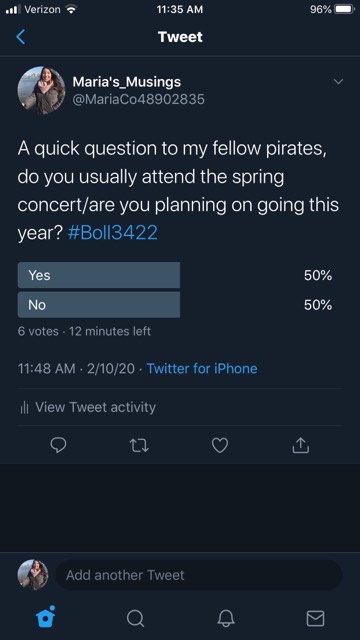
First, I needed to know if students usually attended the Spring Concert or were planning on going this year. This was important because it would help me determine if my observation was right that attendance at this event was drastically dwindling over the years, and if the reputation of the event was affecting potential turnout for this year. Responses to my Twitter poll showed that 50% of those who answered said that they usually attend the spring concert and planned on doing so this year, while the other 50% did not.

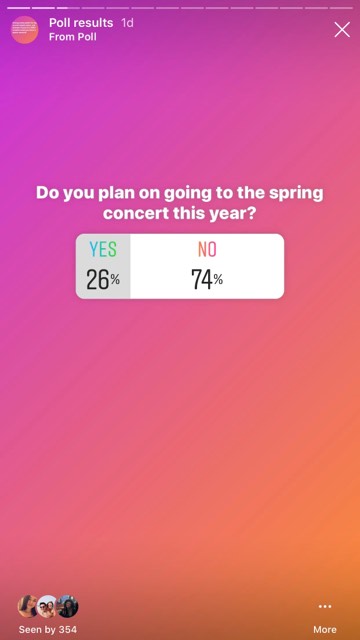
However, knowing that I don’t have that many followers on my Twitter account, I posed the same question on my Instagram story, which received exponentially more responses, which I think provided a more accurate number in the end. These are the results:

As you can see, 81% of those who responded said they do not usually attend the Spring Concert each year, and 74% said that they do not plan on attending this year. With responses from over 100 Seton Hall students, after conducting this poll I feel confident in confirming my idea that due to disappointment with the event over the last few years, students have lost interest in going to the Spring Concert, and are already anticipating not going without even knowing who is performing this year.

This data pointed me to the conclusion that students are not going to the Spring Concert because they are unhappy and disinterested with the artists who are coming to perform, and based on past experiences they assume that this year won’t be any different.

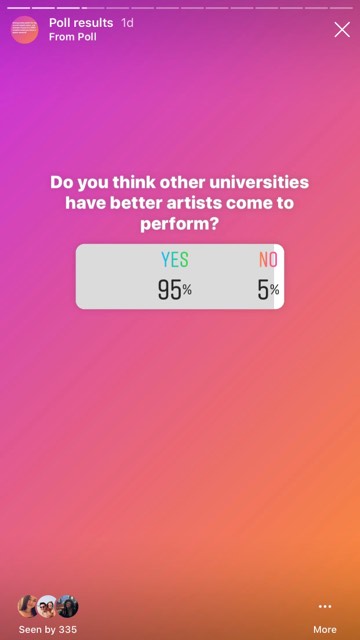
From my personal experience I’ve always thought that other universities had far better Spring Concerts and wondered why Seton Hall couldn’t do the same. I wasn’t sure if this was just personal preference or campus wide opinion, so I decided to take that question to the Instagram polls as well.

As it turns out, the majority of students agreed with me, with 95% of students surveyed stated that they believe other universities have better artists performing at their Spring Concerts. Over the past few years, Seton Hall has had AJR and Jesse McCartney come to perform. Neither of these artists are necessarily huge names or popular with the college crowd, so I can see why students would be disappointed.

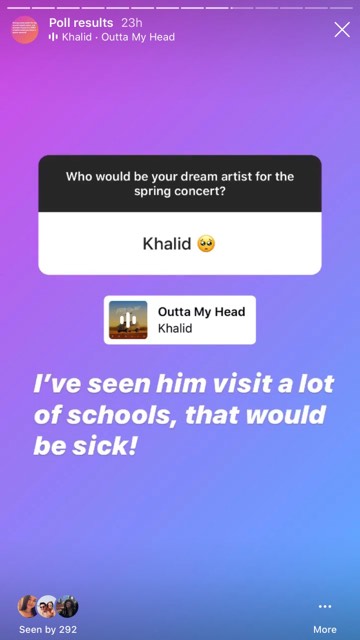
 Even more so, it’s hard not to be jealous when we see our friends from home who attend different universities posting stories of the big artists who have come to their schools. For reference, a few years back one of my close friends from home had Khalid, a Grammy nominated artist, perform at their spring concert at Bentley University. Of course, every university has a different budget and different means, so it is understandable that Seton Hall may not be able to get huge artists. But I believe if SHU put more effort into actually asking students who they would want to see, they would have a much better turnout and happier students.

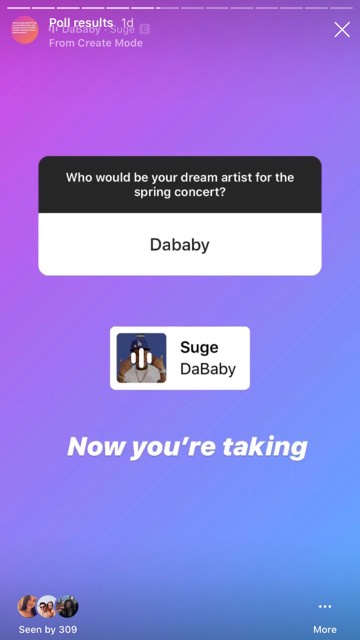
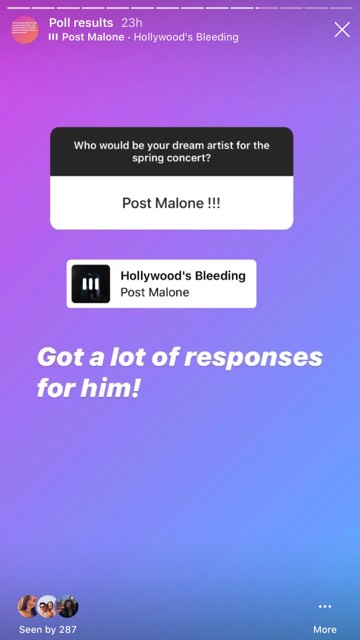
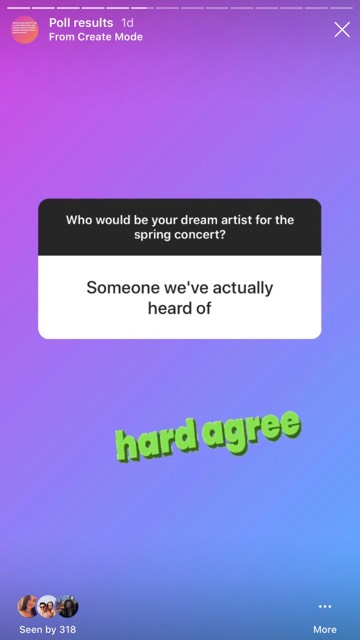
To see how this would work, once again I took to Instagram to ask Seton Hall Students who they would like to see perform at our Spring Concert. Here are just a few of the many responses I got:

Although these are some bigger names, many of these artists have performed at colleges before, so it is definitely in the realm of possibility.

This response alone shows that SHU students aren’t that picky, they just want to see somebody relevant and have a good time!

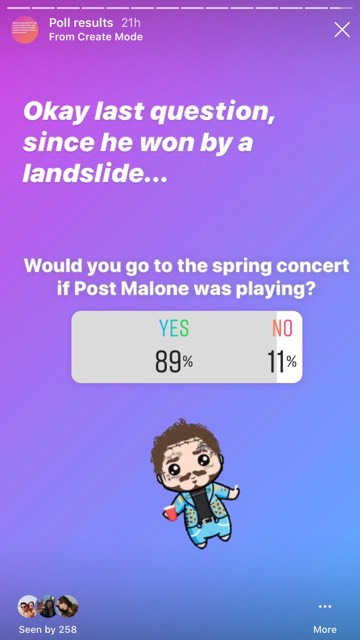
By far, the most popular response that I got was Post Malone. Regardless of how likely it would be to actually get Post Malone specifically to come to Seton Hall to perform, I wanted to see how much more likely SHU students would be to attend the Spring Concert if the artist was someone who they were actually interested in, and had a role in choosing.

The results were astonishing.

Starting off with 74% of students surveyed saying they likely wouldn’t attend this year’s Spring Concert, to end with 89% of students saying they would attend if an artist they liked was performing reveals the main takeaway from all of this crowdsourcing. If SHU wants to compete with other universities and keep these events fun and fresh for pirates, they need to become more in tune with what the students are actually into, and what is current. As I learned from my own research this week, students are more than willing to share their opinions and speak out about what they want, all you have to do is listen. With more input from our own student body, I believe we can bring back the fun with our Spring Concerts!


Featured

Why You Need to Utilize SEO ASAP: Engaging With Audiences

Let’s face it: whether you’re a blogger, a company trying to create a stronger online presence, or a journalist/PR professional, you have one common goal: you want your work to be seen! To be blunt, no matter how great your content is or how hard you worked on your campaign, it doesn’t matter if its not getting any views. In a world where millions of results pop up after entering a simple key phrase, it can be difficult to get your content to the top and make yourself seen. This week, I’m going to mention some important strategies and tools that will not only help you to get your content seen, but more importantly foster engagement with your audience.

In order to determine the individual steps you need to take, we first must have an understanding of what SEO, or search engine optimization, is. In a nutshell, SEO is a way of making your content visible among all the clutter by utilizing key phrases that will help bring your content to the top of the search results. Now, there are a few different ways that you can go about this. In the article SEM VS SEO: What’s the Difference and Which is Right for My Brand by Jennifer Yesbeck, she emphasizes that although both SEM and SEO seek to create the same results, there is a slightly different approach to these methods. To get a more detailed explanation I highly suggest checking out her article on Alexa Blog, but to summarize, the main difference between search engine marketing (SEM) and search engine optimization (SEO) is that SEM is a paid technique, and SEO relies mainly on utilizing free strategies that anyone can do.

With this in mind, it seems like SEO would be the best choice for bloggers like myself, or those in the field who like to take control into their own hands. From what I’ve learned via my own firsthand experience and checking out some of the tips on a few articles about the subject, the most important thing about SEO is doing the research to find out the key words that you should be using. It sounds so simple to just mindlessly plug in some words that you think apply to your company/content, but you need to put in more effort than that to be successful. I think a quote from John Locke from the article SEO Keyword Research: Finding Keywords That Will Drive Traffic summarizes this point well.

“Keyword research is more than just optimizing for your main search term. It’s about blanketing all the search terms your customers are likely to have. Each one of these questions is an opportunity for your business to answer a customer question and establish your authority as a service provider” -John Locke

The main goal of SEO is to drive traffic to your website/content, so its imperative to do your research and think of all the possible keywords that your audience is likely to search. Essentially, you need to think from the perspective of your audience and cater to that.

Speaking of audiences, your work isn’t done once you get them to your website. Of course, it’s great to have followers, but they need to be connecting with your content. If your audience isn’t engaging with the work you’re putting out, all your hard work getting them to your website has been for nothing. Especially from a public relations perspective, your gold is the information you get about your audience, their interactions with your content, and spreading the word. Along with various other benefits, the article How to Sell the Importance of Engagement Over Fan Growth on Social Media by Joe Escobedo from Forbes.com points out that “Engagement can tell you how well your content resonates with your audience. If your goal is to build a relationship with your audience, then you should definitely look at engagement”.

Any PR practitioner will tell you that building relationships with our publics is the core of the industry. Due to its lofty nature the PR industry can be difficult to explain to outsiders at times, but Murray Newlands describes the importance of relationship building in PR exceptionally well in a quote from the article Why Public Relations is Important for your Business from Inc.com. He states, “Great public relations means setting up ongoing relationships with many important influencers (and therefore their audiences) and knowing how your business may become an excellent data source for the influential”.

Overall, I think the main takeaways for this week are that whether you choose to go the SEO or SEM route, its imperative to be taking the steps and using strategies to get your content to the top where your audience will not only see it, but interact with it.

Featured

The New You: Building Your Brand Image and Why it Matters

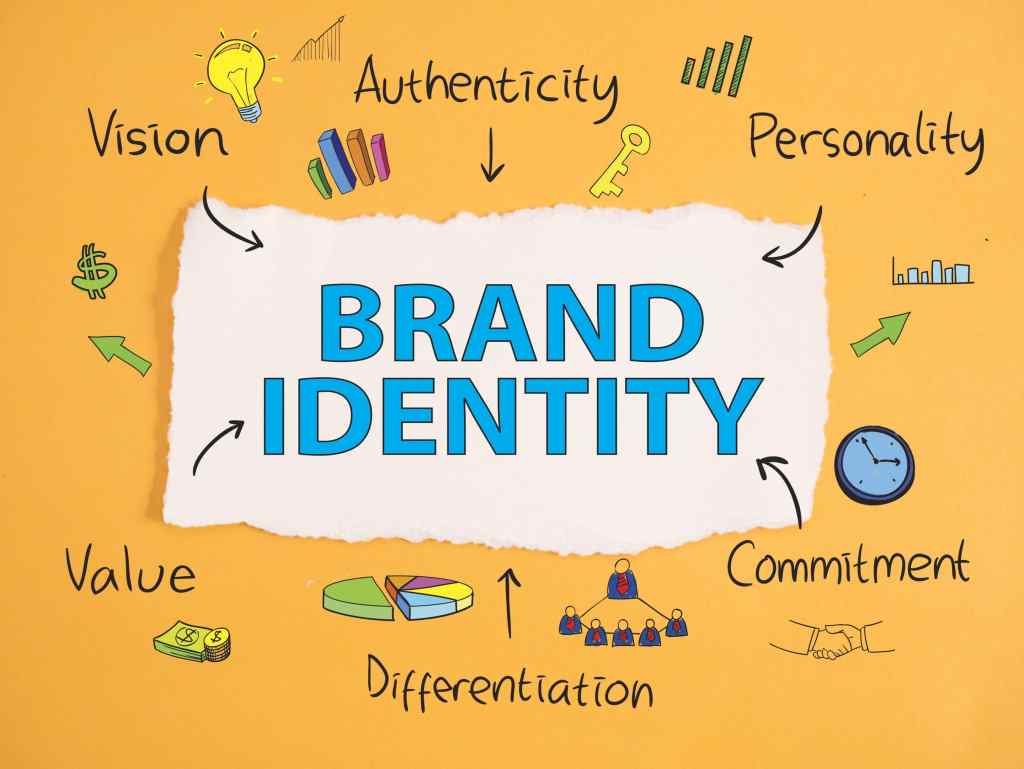
As a public relations major getting ready to enter the workforce, if there’s one thing that has been emphasized in both my classes and internships, it’s the importance of building your own unique brand and personal image. In an era of social media and competition, there are a million different people/companies who are doing the same exact thing you are. The only way that you can differentiate yourself from the pack is to show your audience why you are different, what you can bring to the table, and what sets you apart from your competitors. The best way to do this is by taking a good look at who you are and more importantly, how you want to portray yourself, and creating your brand image from there.

The great thing about branding is that you can actively choose how you want to present yourself to your publics. You alone have complete control over how you want to be seen. A few of the articles and blog posts I took a look at this week gave some tips on how to set yourself apart in the blogosphere and create a compelling brand image that will keep your audience coming back for more.

An article from domain.me by Sarah Green titled Key Strategies for Using Blogging to Build Personal Brand had some helpful tips on how to begin building your “personal brand” that I would highly suggest checking out. In this post, Sarah touched on a key point about the importance of cultivating a great image in this industry that I really resonated with. She states, “Even if you are not looking to build your own personal brand, people are still going to judge you by your content and base their opinion about you based on what you post online. This is why you better do something about your online image anyway and make sure you beat them to the punch”.

I think that this is something extremely important to keep in mind. Even if you aren’t actively doing anything to promote or create a brand image, even not doing anything is still going to send a message to your publics. In a world so enamored with social media and online profiles, it has become a part of our nature to judge by what we see. Because audiences are not likely to take the time to take a deeper look into a company/individual, you simply can’t afford to not create a brand image. People are going to judge anyway, so you might as well put in the time and effort to create an image that will resonate with people and accomplish the goals you wish to set out.

It can definitely be intimidating to begin to tackle creating your own brand image. I can relate to this on a personal level. I often find myself comparing my social media/blogging platforms to other successful platforms. It seems like there is so much creativity going around in regard to both content and aesthetics, it can be hard to keep up with the trends and stay current. To help combat this, Jeff Foster from problogger.com has cultivated a great list of 7 Ways to Build Your Brand in the Blogosphere.

The two most important tips I took away from this article are to send bloggers your product and make sure that you are giving them the opportunity to provide feedback and voice their opinion. Although from the public relations perspective, it can be hard to not have complete control over the message, in the end doing so is beneficial for both parties. Letting the bloggers know that you respect their opinions and value their input not only makes them feel good, but will also make them want to work with you in the future. On the other side of the spectrum, audiences love to hear real, authentic reviews. They can smell an endorsement or product placement from a mile away, so your company/product will get some great positive buzz knowing that the reviews are truthful and not forced.

As an avid YouTube watcher myself, I can definitely tell when a blogger or influencer actually likes a product, or is simply being paid to make positive comments. If I know the influencer genuinely enjoys the product, I am much more inclined to trust their review and actually try out the product.

If you’re in the PR world, you definitely need to recognize the importance of utilizing influencers. An article from grouphigh.com on Social Media Influencers points out the statistic that “90% of consumers trust peer recommendations”. In supporting the idea that utilizing influencers in an honest and transparent way is the best strategy, the article also states, “Consumers want authenticity from the brands they interact with. When marketers equip influencers with an entire experience to share about a brand or product the posts are more engaging”.

If you take anything away from this week’s post, I hope that its to start working on creating your own personal brand image. Whether you’re starting from scratch or have an idea of what direction you want to go in, there is always room for improvement. Social media and technology are constantly changing. Nothing is stagnant, and this goes for the public relations industry as well. In order to stay current and continue connecting with our publics, we need to focus on creating brand images that resonate with our publics on a personal level. It all goes back to the age-old adage; honesty is the best policy. Keep it authentic and true to your personality and core values, and you can’t go wrong.

Featured

Social Media Evolution: Changes in Journalism and Public Relations

The prevalence of social media in our everyday lives is a phenomenon that has been growing over the past decade. New advancements come out every day, and more and more these technologies have become integrated into our existence. Of course, there are both positives and negatives to social media, but nevertheless it cannot be disputed that social media has had a huge impact on society.

Not only has social media effected society at large, but it has also had some serious implications on the journalism and public relations fields. As discussed in the article from Forbes The Future of Public Relations: Three Forks in the Road by Robert Wynne, before social media became so prevalent, what is called “traditional PR” was the bread and butter of the industry. Now, as social media gains favor as one of the best avenues to spread information, traditional outlets (such as print publications) are going out of style in the field. Although some seasoned PR professionals are worried about what this means for the industry, I don’t believe these changes are something to be feared, rather we just need to adapt to them. Social media platforms serve as a huge advantage to the PR field. Never before has it been so easy and effective to spread key messages to publics. Fear of change is understandable, but I believe if harnessed correctly, the power of social media can improve the PR field.

Although I understood the point Wynne was making regarding how social media has changed the PR field, I was slightly insulted and disagreed heavily with one of the comments he made. He states, “Who wants to live in a world where young hipsters in porkpie hats sipping vanilla spice low-fat lattes at coffee shops in Brooklyn, Austin, or West Hollywood spend all day blogging on their iPhones about their thoughts on politics, the economy and culture set the media agenda for the rest of us?”.

Aside from blatantly stereotyping the younger generations, in my opinion, this line of thinking is flawed and counterproductive to the goals of public relations. In order to succeed in this industry, you need to be aware and up to date with trends, societal changes, and the viewpoints of your publics. Like it or not, those “hipsters” are setting trends, and they are using social media to do so. Instead of working so hard to swim against the current, I think the more the industry leans into utilizing social media and recognizing the benefits it has, the more successful the industry will become.

Although social media has affected the journalism industry in similar ways, I found that the article from Medium, Last Call: The End of the Printed Newspaper by Clay Shirky was much more accepting of utilizing social media and adapting to these changes. Of course, there is an understandable fear for those that work in print news, because as social media becomes more prevalent these mediums are going extinct, which inevitably leads to job loss. I would venture to say that circumstances are worse in the journalism field than the PR field, as it is much easier for PR professionals to adapt to using social media, whereas print newspapers risk going out of business completely. What I appreciated about this article is that unlike the previous one, instead of lamenting and resisting these changes, Shirky seems to accept them for what they are, and actually provides helpful and constructive advice for those in the print news industry on how to adapt to these changes and maintain their livelihood in an industry that is rapidly changing. Throughout the article, Shirky provides multiple different pieces of advice on how individuals can take matters into their own hands and improve their skill sets to fit into this new social media influenced landscape.

Shirky’s take on the influence of social media on to the journalism and PR fields aligned a lot more with my own personal views on the situation. In every industry, change is inevitable, and social media just happens to be a part of this change. In life or in your career, you can chose to either adapt to change or let it consume you, but I think it’s better to keep learning and find new ways to utilize the mediums that are available to us.

For as many people that complain about social media, there are just as many professionals in the industry who hail it for the positive changes it has created. For example, the article 5 Ways Social Media Has Changed Public Relations from 5W Public Relations goes into detail stating how social media has changed the PR field for the better.

Overall, despite the uncertainty I am looking forward to the future of journalism and public relations. With increased use of social media in these fields, there is unlimited potential for how we can improve these fields and come up with new, creative ideas. As a budding PR professional, I am excited to break into the field and use social media to my advantage.

https://www.5wpr.com/new/social-media-public-relations/

https://medium.com/@cshirky/last-call-c682f6471c70

https://www.forbes.com/sites/robertwynne/2014/12/09/the-future-of-public-relations-three-forks-in-the-road/#8d2c803544ef

Social Media Press Release Homework

* DISCLAIMER* This press release is not real and is not to be used elsewhere or spread. This is a homework assignment for a social media class at Seton Hall University. The event is real, however names and personal information have been changed for privacy reasons.

April 7th, 2020                                                                                Contact Information

FOR IMMEDIATE RELEASE                                                          Maria Costa, Communication Director

                                                                                                          Cell: (973) 563-2037

                                                                                                          Email: mariac@gmail.com

                               Seton Hall Comm Arts M.A Program to Hold Online Info Session

                                  Session Will Provide an Overview of Program and Q&A

SOUTH ORANGE, N.J- Due to the transition to online learning because of the ongoing COVID-19 pandemic, the Seton Hall University Communication Master’s Program will hold their annual information session virtually in lieu of their usual campus event. The virtual session will provide prospective grad students with the opportunity to learn more about what the program has to offer, as well as potential opportunities and areas of study.

Students who attend the virtual session will be able to speak directly with faculty members within the program about their questions and concerns. Along with providing a general overview of the program, the goal of the session is to leave prospective students informed on a variety of topics involving pursing an M.A in Communication.

            Session Areas of Focus

  • Discuss the three areas of study within the program:
    • Digital Communication and Communication Technologies
    • Communication in Organizations
    • Public Relations
  • Learn what aspects make Seton Hall’s program rise above competitive programs
  • Answer all questions relating to the program, potential scholarships, the application process and graduate internships
  • Help potential students recognize how their unique experiences, education and interests meet the criteria from the program, as well has assisting with career planning

The virtual info session will take place on Tuesday, April 14 from 2-3 p.m. Dr. Renee Robertson, Professor and Programming Director for Seton Hall’s M.A in Communication Program, will be facilitating the discussion live. Additionally, attendees of the online info session will receive a $75 waiver for their application fee.

To register for the event, visit gradapp.shu.edu/register to fill out a survey and reserve a spot. For more information contact Emily Johnson, Graduate Administration Assistant, at emilyjgrad@shu.edu.  

###

Social Media in JO and PR

Class Blog for COJR 3422

Maria's Musings

Discussing all things journalism and public relations for my COJR 3422 class

Discover WordPress

A daily selection of the best content published on WordPress, collected for you by humans who love to read.

The Atavist Magazine

Discussing all things journalism and public relations for my COJR 3422 class

Longreads

Longreads : The best longform stories on the web

WordPress.com News

The latest news on WordPress.com and the WordPress community.

Design a site like this with WordPress.com
Get started